
US EV Fire Incidents Push Higher Safety Standards
Recent EV fire reports across the United States draw wide public attention.Several 2026 incidents in Maine and Seattle raise safety concerns for EV owners.Some parked vehicles ignite inside garages and bring property loss risks.Investigators list multiple possible triggers for these high‑severity accidents.Battery physical damage, thermal runaway and defective charging hardware all rank high.
NHTSA research links nearly 22 percent EV charging fires to charging‑system failures.Uncertified chargers and overloaded circuits create hidden electrical hazards for households.Meanwhile, market demand for reliable portable EV charging stations keeps rising fast.Buyers prioritize verified safety performance alongside flexible mobility features.
This article reviews real‑world risks, core product strengths and practical application value.It also guides B2B purchasers to select compliant portable EV charging hardware in 2026.
Key Insight: Distinguish Vehicle Battery Risks from Charging‑Equipment Hazards
First of all, most EV fires stem from different root causes in real cases.Some accidents happen after road debris punctures the under‑body battery pack.Other dangerous conditions come from low‑grade, uncertified charging devices.Unqualified chargers deliver unstable current and overheat during long charging cycles.They may trigger abnormal battery heating and speed up thermal‑runaway progress.
Furthermore, many American homeowners face limitations on fixed charger installation.Old residential wiring cannot support high‑power fixed wall‑mount charging piles.Improper installation creates extra fire risks inside closed garages or parking spaces.On the contrary, well‑designed portable EV charging stations solve part of these pain points.They do not remove all vehicle‑battery‑related risks by any means.Yet they add multi‑layer safety barriers to avoid charging‑triggered accidents.
Besides, official bodies like CPSC and NHTSA stress certification checks for buyers.Non‑certified low‑cost charging products frequently appear in US safety recall lists….Therefore, B2B buyers must focus on verified safety standards before bulk procurement.
Core Advantage One: Multi‑Dimensional Safety Mechanism Against Charging‑Related Risks
Safety sits at the core value of qualified portable EV charging stations for North America.To start with, complete electrical protection modules run through every charging session.Built‑in sensors track real‑time voltage, current and surface temperature data constantly.Once values go beyond safe thresholds, the unit cuts power instantly.It handles over‑current, over‑voltage and short‑circuit risks in real‑time mode.
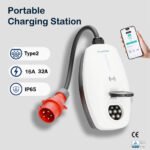
In addition, residual‑current protection blocks potential electric‑shock hazards.This function matters greatly for home garage and outdoor temporary charging scenarios.Moreover, high‑grade shell material uses flame‑retardant engineering plastic.It resists external impact and slows flame spread under abnormal heat conditions.Many models reach IP65 rating for water‑proof and dust‑proof outdoor operation.Rain or dust will not easily damage internal circuit structures in open‑air environments.
What is more, adjustable current output fits aging household grid conditions.Users lower charging current for circuits with limited load capacity.This simple setting avoids circuit overload caused by mismatched power output.Smart versions push fault alerts through mobile APP or cloud management platforms.Operators receive instant warnings before small faults turn into serious accidents.All above features align with UL2202 and ETL safety requirements for US markets.Certified hardware greatly reduces fire risks caused by charging‑equipment failures.
Core Advantage Two: True Portability Optimizes Charging Location Selection
Many recent US EV fire cases take place inside enclosed residential garages.Closed spaces trap heat and accelerate fire expansion once abnormal heating appears.Portable EV charging stations bring flexible location choices for EV drivers.
First of all, users can move the whole unit to open‑air parking zones freely.They complete charging outside garages whenever high‑risk conditions emerge.This habit lowers property loss risks if unexpected thermal events happen.Furthermore, it skips complex fixed installation and permanent wall reconstruction.Rental households and property managers gain huge convenience from this design.Teams deploy units quickly for temporary events, fleet yards or construction sites.No foundation work or long‑term wiring modification is required for setup.
Besides, compact size allows storage inside vehicle trunks for road emergency use.Drivers get rescue charging support far away from public charging infrastructure.In addition, fleet operators rearrange charging positions according to daily vehicle flow.They avoid over‑loading power supply at single fixed charging spots.
Above all, mobility does not mean compromise on safety standards for formal products.Buyers should reject cheap knock‑offs without North‑American safety certification.
Core Advantage Three: Smart Digital Functions Improve Whole‑Process Risk Control
Smart management becomes increasingly critical for modern portable EV charging hardware.Many safety incidents develop silently without timely user notification in real life.Qualified portable stations integrate Wi‑Fi or 4G cloud connection modules.
First, users check full charging data remotely through mobile APP interfaces.Real‑time temperature, power output and session duration show on mobile screens.Owners do not need to stay beside vehicles for whole charging cycles.Secondly, users set charging schedules to use off‑peak electricity periods.They can avoid long‑time high‑load charging during hot mid‑day hours.This adjustment reduces continuous heat accumulation for both charger and EV battery.Thirdly, historical charging logs record every session’s working parameters.Operators review these records for early fault discovery and regular maintenance.For B2B clients, unified cloud dashboards manage dozens of portable stations together.Managers spot abnormal‑working units among large‑scale deployed equipment.
What is more, over‑the‑air firmware updates upgrade protection logic remotely.Technicians do not visit each site for manual program modification work.Nevertheless, smart functions serve as auxiliary tools rather than total risk elimination.Users still need basic routine inspection for cables and plug connectors.
Core Advantage Four: Wide Compatibility Fits Diverse North‑American EV Models
The US EV market covers multiple mainstream vehicle brands and connector standards.Good portable charging stations support J1772 and NACS interface specifications.They work for most mass‑market EVs and plug‑in hybrid vehicles on local roads.Power output options range from 7 kW AC up to 30 kW DC portable models.Buyers pick proper power grades for household, fleet or emergency rescue scenarios.
Furthermore, these units cooperate well with vehicle onboard battery management systems.Two‑way digital handshakes happen before each formal charging start.
The charger reads vehicle battery status and matches safe power output automatically.This mechanism prevents mismatched power input that harms lithium‑ion battery packs.In addition, certified hardware follows local grid standards across US states.It adapts to 120V and 240V household power supply conditions.Stable sine‑wave output avoids voltage surges that damage vehicle electronics.
For fleet businesses, compatible portable stations cut extra adapter purchase costs.They serve mixed vehicle fleets without frequent hardware replacement work.
Practical Application Scenarios for Private Users and B2B Operators
Against the background of US EV‑safety discussions, portable stations show clear value.
Private Household Users
For family EV owners, it solves fixed‑installation barriers in old houses.Users move chargers outdoors when they worry about garage charging risks.It offers backup charging capacity when public piles break down or stay fully occupied.Smart scheduling also helps to reduce household electricity bills month by month.
Commercial Fleet Operators
Delivery fleets, taxi teams and car‑rental companies face heavy daily charging pressure.Portable charging stations expand capacity without large‑scale construction investment.Operators shift units to match peak vehicle‑parking time windows.Real‑time cloud monitoring lowers safety management workload for fleet managers.
Emergency Rescue and Public Service Teams
Road‑assistance teams deploy portable stations for stranded EV rescue missions.They supply limited power to move broken vehicles toward professional repair shops.Event organizers set temporary charging services for exhibitions or sports competitions.These mobile units avoid risks from hastily built temporary fixed charging piles.
Property and Community Managers
Many US residential communities lack enough pre‑installed charging infrastructure.Property teams add portable stations without grid‑renovation projects.Multi‑user permission management controls equipment access for community residents.Operators can pull risky units offline fast once abnormal signals appear.
Market Trend: Safety‑First Procurement Becomes Mainstream in US 2026
Recent publicized EV‑safety incidents reshape purchasing logic across the US market.Consumers and corporate buyers no longer chase low prices as top priority.Safety certification and verified protection performance move to the first selection position.Industry statistics show portable EV charging station demand grows 18.7 % year‑on‑year.Market growth comes from households, fleet companies and public‑service departments.
On the one hand, fixed charging piles face high construction permit barriers in many cities.Portable solutions lower entry thresholds for EV charging capacity expansion.On the other hand, insurance companies pay closer attention to charging‑equipment safety.Some US insurance providers reference product certification for household EV insurance policies.Uncertified charging hardware may bring claim‑denial risks for property damage cases.Therefore, qualified UL‑certified portable stations gain extra market competitive edges.
Even so, industry experts remind users of objective product limits.Portable charging stations cannot fix inherent vehicle‑battery manufacturing defects.Drivers still follow automaker guidance on battery inspection and usage rules.Buyers stay alert to ultra‑low‑price products without complete North‑American certifications.Recall cases in CPSC database prove hidden dangers of unqualified charging hardware.
Conclusion: Choose Reliable Portable EV Charging for Balanced Safety and Flexibility
To sum up, recent US EV fire events raise public awareness of whole‑chain charging safety.Vehicle battery failure and charging‑equipment defects both contribute to rare serious accidents.Well‑certified portable EV charging stations deliver multiple practical strengths.They own comprehensive multi‑layer electrical and thermal safety protection systems.Flexible mobility supports safer open‑air charging location arrangement.Smart remote monitoring realizes early warning for potential equipment faults.Wide compatibility meets diverse demands from private drivers and B2B operators.
This solution fills gaps left by fixed charging infrastructure in the North‑American market.It cannot remove all EV‑related risks completely in real‑world operation.Yet it builds critical safety barriers against charging‑triggered fire hazards.
For 2026 purchasers across United States, prioritize formal safety certifications.Select high‑quality portable EV charging stations for safer, flexible and efficient power supply.