
Introduction
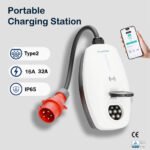
North‑America’s EV market keeps expanding at a steady pace.Home, fleet and small‑business buyers demand reliable Level‑2 charging hardware.Fixed wall‑mounted chargers dominate many project plans today.Even so, portable wallbox units bring unique practical advantages for diverse end‑users.These compact devices deliver Level‑2 power with full mobile‑APP control.They fit residential garages, fleet yards and small‑commercial parking zones equally well.
Local compliance forms a non‑negotiable baseline for market entry.All residential and commercial Level‑2 wallboxes must pass UL2202 certification in North‑America.Every unit also needs full alignment with NEC Article 625 electrical code requirements.Buyers and distributors cannot overlook these critical compliance rules.Besides safety standards, financial incentives shape current purchasing decisions.The US federal 30C tax credit offers 30 percent of hardware‑and‑installation costs.This benefit caps at USD 1000 for each residential wallbox installation.Yet this residential incentive expires strictly on June 30 2026.Moreover, the credit only applies to addresses within qualified census tracts.Not every property qualifies, so project planners must verify location status early.
Our UL‑certified product portfolio supports both J1772 and NACS connector standards.We cover three core segments: private homes, vehicle fleets and small‑commercial sites.This article walks through key market drivers, product strengths and compliance notes.We also share practical points for your upcoming product‑mix planning work.
Why Portable APP‑Enabled Wallboxes Gain Market Traction
Traditional hard‑wired wallboxes serve many stable‑location use‑cases perfectly.However, multiple customer groups face clear limitations from fixed hardware.First, many urban renters and multi‑unit‑dwelling residents cannot modify building wiring.They cannot install permanent hard‑wired charging equipment on rented premises.Second, small‑business operators often shift parking layouts over short time windows.Third, fleet operators may need temporary charging spots for seasonal‑vehicle groups.Fourth, some property owners want charging backup for trips or off‑site work events.
Portable wallboxes solve these real‑world pain‑points directly.You mount the unit on a wall for stationary use.You can also detach and transport the whole unit to other valid power outlets.No permanent wiring modification locks the device to one single location.On top of mechanical flexibility, built‑in APP control adds smart‑operation value.Basic portable chargers only offer simple start‑and‑stop physical buttons.By contrast, APP‑connected portable wallboxes open rich remote‑management functions.Thus, the combination of portability and smart software creates strong market differentiation.
Residential buyers value flexibility above many other features.Apartment‑dwellers, frequent movers and second‑home owners make up one large buyer group.Meanwhile, small‑commercial and fleet buyers focus on total‑cost‑of‑ownership benefits.They avoid repeated contractor fees for multiple fixed‑station deployments.For these reasons, portable APP‑controlled wallboxes fill a clear product‑gap in today’s EV‑charging lineup.
Core Product Advantages of APP‑Controlled Portable Level‑2 Wallboxes
Compliance‑Ready Hardware for North‑American Deployment
Compliance sits at the foundation of every viable charging‑product offering.Our portable wallbox models hold formal UL2202 certification.Every unit follows NEC Article 625 electrical‑code design rules.Distributors and installers can present verified documentation to inspectors.This certification status removes major risks for installers and end‑customers.
The hardware supports both J1772 and NACS industry‑standard connectors.J1772 remains the universal AC‑charging standard for most non‑Tesla EVs.NACS gains wider adoption across newer North‑American vehicle fleets.Your customers will connect nearly all mainstream EV models without extra complexity.Weather‑resistant enclosure designs support both indoor‑garage and outdoor‑parking‑lot use.Robust thermal‑protection circuits defend against overheating during long charge cycles.
Practical APP‑Control Functions for Daily‑Use Scenarios
Smart‑phone APP connectivity transforms basic charging into a managed workflow.Users access core functions from iOS or Android mobile devices.First, operators start or stop charging sessions remotely from their phones.They do not need physical access to the wallbox unit itself.Second, real‑time data flows into the APP dashboard during every charge session.Drivers view live current, power draw and accumulated energy‑consumption numbers.Third, scheduled‑charging modes support off‑peak‑utility‑rate optimization.Home users set delayed‑start times to tap cheaper overnight electricity prices.Fleet managers schedule vehicle‑charging to match shift‑change timelines.
Fourth, the APP stores full historical‑charging logs for review and export.Homeowners track monthly energy‑usage for household‑budget planning.Commercial‑fleet teams analyze energy data across dozens of connected vehicles.Fifth, instant alert notifications reach users for error or fault‑condition events.Quick warning messages help operators resolve minor issues before serious damage occurs.
Notably, these smart features do not disable basic offline operation.Users can still launch normal charging without active Wi‑Fi or APP connection.This hybrid design delivers reliability even during temporary network‑outage events.
Dual‑Mode Operation: Wall‑Mounted Station or Transportable Unit
Most competing products force customers to pick one single setup style.Our portable wallbox supports two clear working modes.In wall‑mount mode, users fix the device onto garage or parking‑lot wall surfaces.It functions exactly like a conventional fixed Level‑2 wallbox.When users need mobility, they detach the whole unit quickly.They transport the charger to other sites with valid 240‑volt outlet infrastructure.Rental‑property residents take their charger when moving to new housing.Fleet teams move units between parking zones for temporary‑vehicle‑group servicing.Small‑business owners shift chargers for pop‑up‑event‑support requirements.
This dual‑mode capability cuts total‑hardware spend for many mixed‑use projects.One single hardware unit handles multiple use‑cases across time.
Critical Financial Incentive Notes: 30C Tax Credit Rules and Deadlines
Many residential buyers ask directly about the US federal 30C tax‑credit program.First, restate the core incentive numbers clearly for your sales conversations.Qualified residential installations receive 30 percent of eligible project costs.The maximum available credit per home wallbox installation equals USD 1000.
Two strict constraints govern this benefit for residential customers.First, the residential‑version of this credit expires June 30 2026.The unit must be placed‑in‑service before this hard deadline date.Purchase dates alone do not qualify for the tax‑credit benefit.Second, the installation address must sit within an approved census‑tract zone.Not every home location meets this official‑program requirementInternal R….Customers should run official‑government‑mapping checks before project kick‑off.
Distributors and installers need to communicate these rules transparently.Misleading expectations around tax‑credit eligibility create post‑sale friction.Even after the 30C residential deadline passes, commercial‑project incentives may remain open.You should separate residential and commercial‑project planning workstreams.Our portable wallbox hardware meets all hardware‑qualification requirements for incentive‑eligible deployments.Still, location, service‑date and tax‑filing rules sit outside product‑control scope.
Target Customer Segments and Real‑World Deployment Scenarios
Residential End‑Users
Three main residential‑customer profiles show strong buying interest.The first group covers renters and multi‑unit‑building residents.These people cannot run permanent hard‑wired charger installations.They want safe, fast Level‑2 charging without building‑modification work.The second group includes frequent‑movers and second‑home owners.They value the ability to take their charging hardware to different properties.The third group consists of homeowners seeking backup‑charging capability.They keep the portable wallbox as a spare unit for trips or guest‑vehicle‑support.
For all these households, UL2202 compliance and NEC 625 alignment remain mandatory.If their address qualifies, they may claim the 30C tax‑credit before June 30 2026.
Small‑Commercial Deployments
Small‑commercial sites cover retail parking lots, office buildings and small‑warehouse premises.Many site‑owners test EV‑charging services before committing to large‑scale capital spend.Portable APP‑controlled wallboxes offer low‑risk pilot‑project options.Business teams mount units on walls for regular employee‑or‑customer‑charging service.If business‑needs shift, they relocate hardware without major construction‑work.The APP function supports basic energy‑tracking for business‑expense reporting.
Light‑Duty Fleet Operations
Local‑service fleets, delivery‑van groups and small‑business vehicle‑parks represent another key segment.Fleet‑managers face variable‑vehicle‑parking‑volume patterns across weeks or seasons.They can re‑position portable wallboxes to match changing‑parking‑bay‑utilization rates.Central APP‑based logging simplifies fleet‑energy‑consumption analysis.All units maintain full UL and NEC compliance for commercial‑site operation.
Key Considerations for Product‑Mix and Distribution Planning
Market players must balance multiple factors for successful product‑portfolio building.First, compliance documentation must travel with every product batch.Distributors require easy‑access UL2202 certificates and NEC‑alignment statements.Installers will request these documents during site‑permit‑application workflows.Second, clearly separate J1772‑ready and NACS‑ready SKUs inside your catalog.Some customers prefer native‑NACS hardware; others stick with mature J1772 setups.Offer clear adapter‑solution notes for cross‑standard‑vehicle compatibility.
Third, educate sales channels on the 30C tax‑credit fine print.Stress the June 30 2026 expiration and qualified‑census‑tract location limits.Avoid over‑promising tax‑credit outcomes to prospective residential buyers.Fourth, highlight the portable‑wallbox’s unique dual‑mode selling‑points.Many competitors only push fixed hard‑wired wallbox alternatives.Your sales teams should emphasize both wall‑station‑and‑transport‑use‑cases.
Fifth, clarify APP‑functional boundaries during customer‑pre‑sales conversations.Remote‑control features rely on stable local‑site Wi‑Fi network performance.Offline‑mode basic‑charging still works when wireless‑connectivity drops away.This honest expectation‑setting reduces post‑purchase‑support‑ticket volumes.
Distributors, installers and system‑integrators can combine portable‑wallbox SKUs with fixed‑wallbox lines.Fixed‑units serve stable‑permanent‑location‑projects.Portable APP‑controlled models capture renter, pilot‑project and flexible‑fleet‑opportunities.This mixed‑product‑strategy widens your addressable‑customer‑base significantly.
Conclusion
Portable APP‑controlled Level‑2 EV wallboxes deliver a powerful hybrid‑solution for North‑American markets.They merge wall‑station‑style Level‑2 charging with genuine hardware‑transport flexibility.Smart‑phone APP‑functions bring remote‑control, scheduling and detailed‑energy‑tracking capability.All our product variants satisfy UL2202 certification and NEC Article 625 electrical‑code standards.They support mainstream J1772 and NACS vehicle‑connector ecosystems.
Market actors must keep the 30C tax‑credit timeline firmly in mind.Residential‑installation eligibility ends June 30 2026 and depends on valid‑census‑tract addresses.These incentive‑rules shape near‑term residential‑customer purchasing timelines.
Residential renters, small‑commercial operators and light‑duty‑fleet managers represent high‑potential‑buyer groups.Each segment gains tangible value from this portable‑smart‑charging‑hardware category.We welcome deeper conversations about your exact product‑mix‑planning priorities.Together we can build a balanced portfolio that captures both fixed‑station and flexible‑charging‑market demand.